How to Share an Airtable Base as a Template

Sharing a base as a template lets someone copy your entire structure, views, automations, and interfaces into their own workspace with one click. It is the right approach when you want to distribute a reusable system rather than give direct access to your own base.

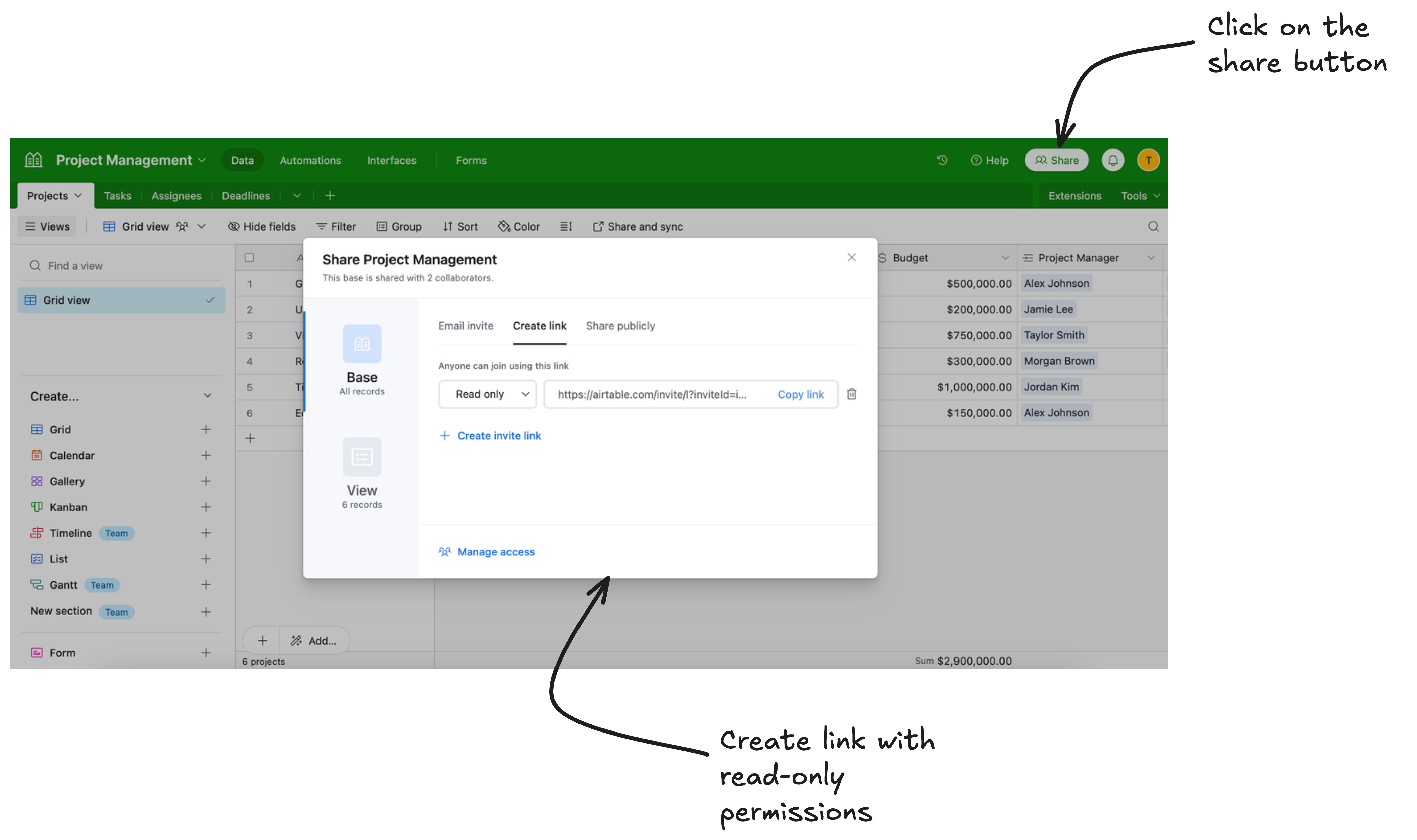
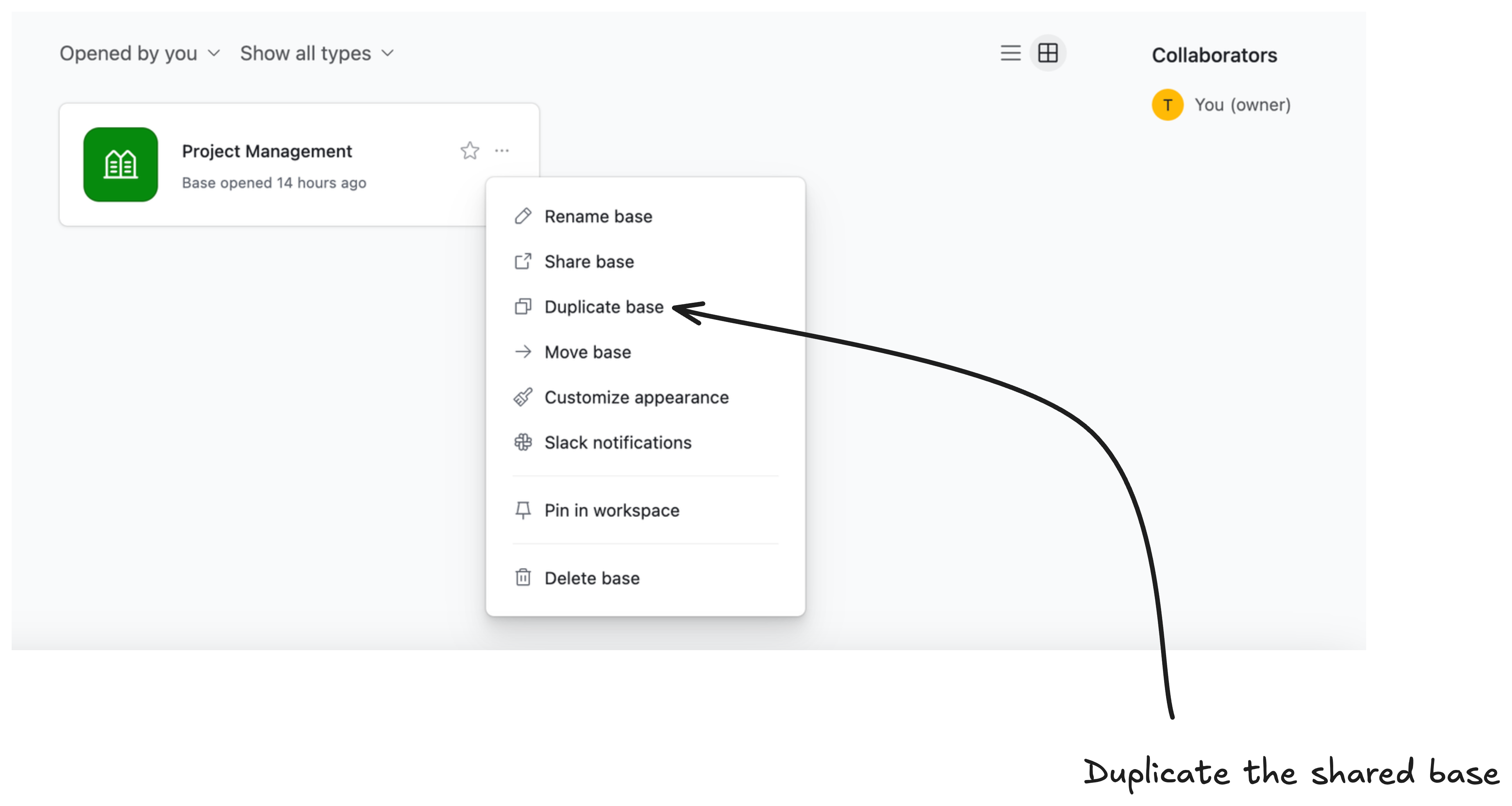
Airtable base sharing workflow showing how viewers can copy a shared base into their own independent workspace

What a Template Copy Includes

When someone uses your template to create a copy, they get:

  • All tables and their field configurations
  • All views (grid, gallery, kanban, calendar, etc.) and their settings
  • All Interface pages and their layouts
  • All automations including trigger and action configurations
  • All extensions and their settings

What they do not get, or get with caveats:

  • Records: you choose whether to include sample data or deliver an empty structure. Sample data is useful for teaching; an empty structure is cleaner for production use.
  • Service connections: automations that connect to Gmail, Slack, or other external services need to be re-authenticated in the copy since the credentials belong to the original account.
  • Collaborators: the copy goes into the recipient's workspace. You are not a collaborator unless they invite you.

Option 1: Share a Private Template Link

This is the simplest approach. Anyone with the link can make a copy of your base.

  1. Open the base you want to share as a template
  2. Click the three-dot menu at the top of the base
  3. Select Share template
  4. Choose whether to include records or deliver an empty copy
  5. Copy the generated link

Send this link to anyone you want to give the template to. When they open it, they see a preview and can click "Use this template" to copy it into their own workspace.

The link is permanent and works for anyone who has it. There is no expiry and no limit on how many people can use it. If you want to revoke access, you can disable the template link from the same sharing settings.

Option 2: Publish to Airtable Universe

Airtable's public template gallery (called Universe) is where you can publish templates that anyone can discover and use, not just people you share the link with directly.

To submit a template to Universe:

  1. Go to airtable.com/universe
  2. Click Add a template (you must be logged in)
  3. Select the base, write a description, add tags and a cover image
  4. Submit for review

Airtable reviews submissions before publishing them. Approval typically takes a few days. Once published, your template appears in search results on the Universe page and can be used by anyone.

Universe is useful if you are building a consulting practice around Airtable and want organic discovery, or if you are sharing a genuinely useful system with the community. See viewsandbases.com for examples of Airtable systems built for specific use cases.

Option 3: Duplicate Into a Client's Workspace Directly

If you are delivering a template to a specific client and want to be sure it is set up correctly, duplicating the base directly into their workspace is more reliable than sending a template link.

Have the client invite you to their workspace, then duplicate the base from your own account into theirs. This gives you the opportunity to:

  • Re-authenticate any service connections before handing over
  • Walk the client through the structure while you are both looking at the same base
  • Confirm automations are running correctly

Once the setup is verified, the client removes you from their workspace.

For more on what carries over during a base duplication, see how to share an Airtable base with automations intact which covers exactly what is preserved and what needs post-duplication attention.

Keeping Templates Updated

Once you share a template link, any changes you make to the original base are not reflected in copies already made. Each copy is independent. If you update the template and want existing users to have the new version, they need to make a new copy and migrate their data across.

For clients who need updates delivered automatically, the template approach does not work well. In that case, consider keeping the client on a live shared base rather than a copy, so changes propagate immediately.