Why Record History Looks Different Between Data and Interface Views in Airtable
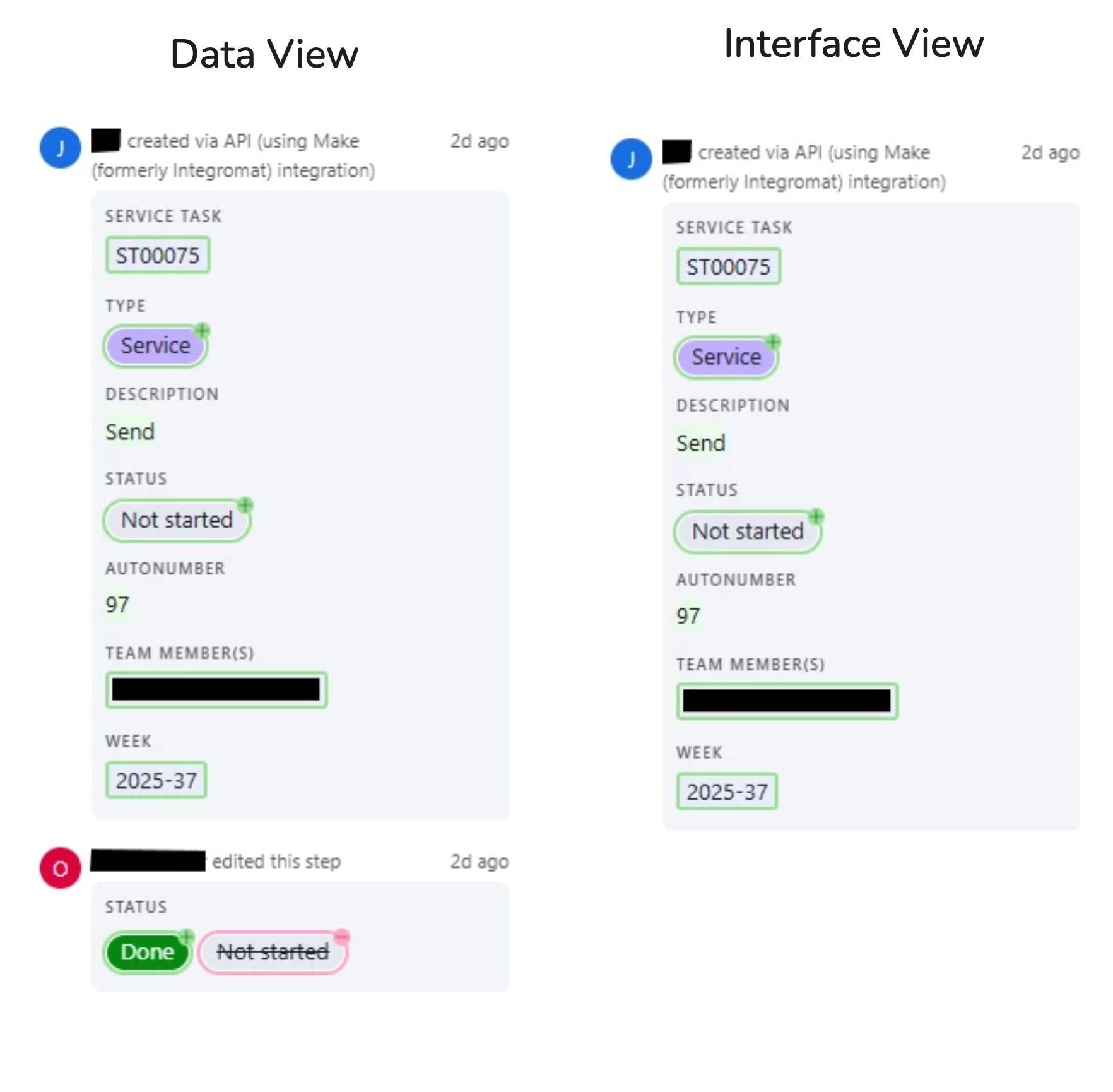
When you open a record from an Airtable Interface and check the revision history, it shows fewer changes than the same record's history when viewed from the Data tab. Fields that were updated do not appear in the Interface history at all.
This is not a bug. It is how Airtable Interfaces are designed to work.
Why the Histories Look Different
When you open a record from the Interface, Airtable only shows revision history for fields that are visible on that particular Interface layout.
If a field is not included in the Interface layout, changes to that field do not appear in the revision history when the record is viewed from that Interface. The Data view, by contrast, shows every field change regardless of which fields are visible anywhere.
This is intentional. Interfaces act as a visibility and access layer on top of your base. They expose only what you choose to include in the layout. Airtable applies this same principle to revision history: if a field is not visible in the Interface, its change history is not exposed there either.
This means someone viewing a record through an Interface cannot infer what other fields exist in the base by studying the revision history. The history is scoped to what the Interface shows.
When This Causes Confusion
The most common scenario: a team member opens a record through an Interface, sees it was updated, but the revision history shows nothing changed. Meanwhile, a Creator who checks the same record from the Data tab can see all the changes clearly.
The team member is not missing access to the data itself. They can see the current values of all fields visible in the Interface. But if the change happened to a field not included in their Interface layout, the revision history for that field does not appear.
This is especially common when:
- An automation updated a backend field (like a status or score field) that is not exposed in the Interface
- A Creator changed a field that exists in the base but was never added to the Interface layout
- A formula field or rollup recalculated, and the underlying trigger field is not visible in the Interface
What to Do About It
If you are a Creator and need full history: open the record from the Data tab rather than the Interface. The Data tab always shows the complete revision history for all fields.
If you want more history to be visible to Interface users: add the relevant fields to the Interface layout. Once a field is visible in the Interface, its changes appear in the revision history for Interface users going forward. Historical changes made before the field was added may or may not appear depending on when they occurred.
If you need to audit a specific field change and do not want to add it to the Interface: use the Data tab directly, or check the automation run history if the change was made by an automation. See How to Monitor Your Airtable Automations for how to trace automation-triggered changes.
The Underlying Principle
Airtable Interfaces are not just a visual layer. They are an access boundary. The revision history scoping is one of the places where this becomes visible in practice.
If you rely on revision history for compliance or audit purposes, it is worth understanding that team members working only through Interfaces may not have visibility into the full change history of a record. For audit requirements, accessing records through the Data tab or using a dedicated audit trail tool gives a more complete picture.
For more on how the Interface visibility layer affects what data is accessible to different users, see Why You Cannot Restrict Sensitive Data in an Airtable Base and Using Base-Level Field Permissions to Control Editing in Interfaces.